Is Your Pet Depressed? 7 Silent Signs Most Owners Ignore
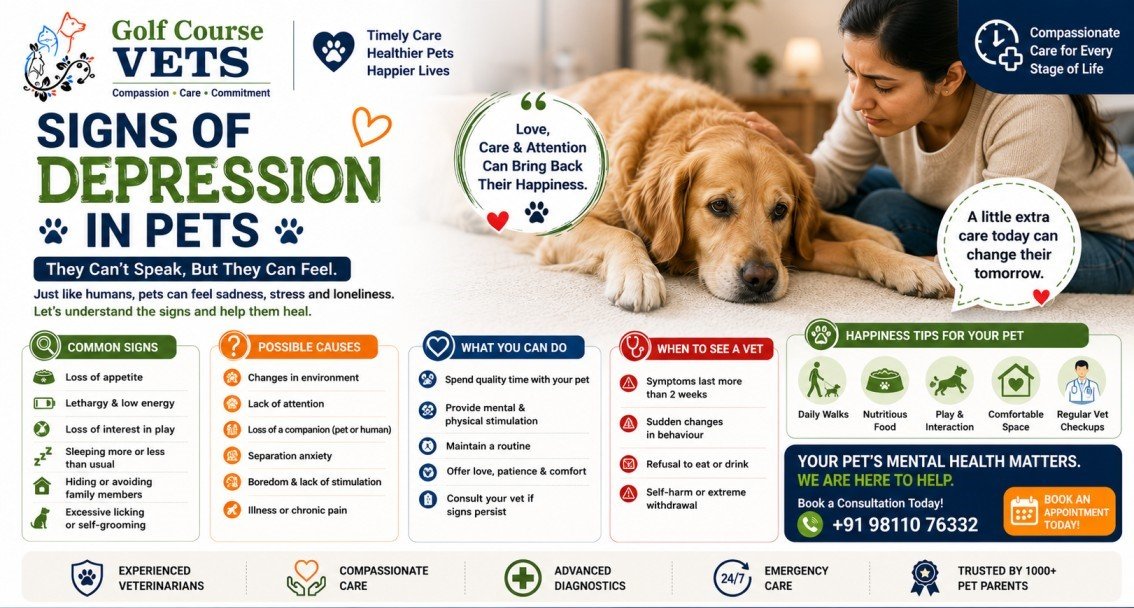
Pets are not just animals living in our homes. They are emotional companions who build deep connections with their owners and surroundings. Just like humans, dogs and cats can also experience sadness, loneliness, anxiety, and emotional stress. Unfortunately, many pet owners fail to recognize these signs because depression in pets often appears quietly and gradually.
A playful dog suddenly becoming inactive or a social cat avoiding interaction may seem normal at first, but these behavioral changes can sometimes indicate emotional distress. In busy cities like Gurgaon, where many pets spend long hours alone in apartments while owners are away at work, emotional health problems in pets are becoming more common than most people realize.
Many pets suffer silently because owners mistake emotional stress for “lazy behavior” or mood swings.
Understanding these subtle warning signs can help pet owners support their furry companions before emotional problems become serious.
Pets Can Feel Emotional Stress Too
Animals form strong emotional bonds with people, routines, and environments. Sudden lifestyle changes, loneliness, lack of attention, or traumatic experiences can affect a pet’s mental well-being.
Dogs especially thrive on companionship and routine, while cats often hide emotional discomfort until it becomes severe. Emotional stress can slowly affect eating habits, sleep patterns, energy levels, and social behavior.
A sudden personality change in your pet should never be ignored.
Sleeping More Than Usual Can Be a Warning Sign
One of the earliest signs of emotional distress in pets is unusual sleeping behavior. While dogs and cats naturally sleep for long hours, excessive sleeping combined with low energy and reduced excitement may indicate depression.
A pet that once became excited for walks, food, or playtime may now prefer isolation and inactivity. Some pets sleep simply to avoid stress or boredom.
This behavior is especially common in pets left alone for long periods in apartments.
Loss of Appetite is Often Linked to Emotional Health
Depressed pets frequently lose interest in food. A dog refusing favorite treats or a cat avoiding meals may not always be physically ill. Emotional stress can directly affect appetite and digestion.
Changes like moving homes, losing a companion animal, reduced owner interaction, or environmental stress may trigger appetite loss.
If emotional stress continues, appetite problems can eventually affect physical health as well.
Avoiding Interaction & Hiding Frequently
Social withdrawal is another silent sign many owners overlook. Dogs that usually enjoy affection may suddenly avoid touch or interaction. Cats experiencing stress often hide in corners, under beds, or isolated spaces.
Some pets become emotionally distant rather than openly aggressive.
This behavior may indicate:
- loneliness
- anxiety
- fear
- emotional exhaustion
Pets communicate discomfort through behavior changes because they cannot express emotions verbally.
Sudden Irritation or Aggression Can Indicate Stress
Depression does not always appear as sadness. Some pets react emotionally through irritation, aggression, or unusual mood swings.
A normally calm dog may become impatient or reactive, while cats may scratch or hiss more frequently. Emotional frustration, anxiety, and mental overstimulation can contribute to these reactions.
Behavioral changes are often emotional cries for help rather than “bad behavior.”
Excessive Licking or Chewing is Not Always Normal
Many emotionally stressed pets develop repetitive habits like licking paws excessively, chewing objects, or grooming obsessively. These actions sometimes work as coping mechanisms to reduce anxiety.
Over time, excessive licking may lead to skin irritation, infections, or hair loss.
This behavior is common in pets experiencing:
- boredom
- loneliness
- separation anxiety
- lack of stimulation
Gurgaon Lifestyle Can Affect Pet Mental Health
Modern urban lifestyles can unintentionally affect pets emotionally. Long office hours, limited outdoor activity, apartment isolation, loud traffic, and reduced social interaction may create emotional stress for pets living in cities like Gurgaon.
Dogs that do not receive enough exercise or stimulation often become emotionally frustrated. Cats living completely indoors may also experience boredom and inactivity if their environment lacks enrichment.
Mental stimulation is just as important as food and physical health for pets.
How You Can Help a Depressed Pet?
Helping emotionally stressed pets requires patience, attention, and consistency. Spending quality time with pets, maintaining routines, providing exercise, and encouraging interactive play can improve emotional well-being significantly.
Simple activities like daily walks, puzzle toys, grooming sessions, and social interaction help pets feel emotionally secure.
In some situations, underlying medical conditions may also contribute to emotional changes. If behavior changes continue for several days, professional evaluation becomes important.
Experienced veterinarians like
Golf Course Vets
can help identify whether your pet’s behavior is linked to emotional stress, illness, or other health concerns.
🧠 Final Thoughts
Pet depression is real, and many animals silently struggle with emotional stress without owners realizing it. Small behavioral changes such as sleeping more, avoiding interaction, appetite loss, or excessive licking may seem minor initially, but they can indicate deeper emotional discomfort.
Your pet may not speak your language, but their behavior speaks volumes.
By paying attention to emotional health and creating a supportive environment, pet owners can help their furry companions feel happier, healthier, and emotionally secure.
Frequently Asked Questions
Q1.Can dogs and cats really get depressed?
Yes, pets can experience emotional stress and depression due to loneliness, routine changes, lack of attention, or environmental changes.
Q2.What are the common signs of depression in pets?
Common signs include excessive sleeping, appetite loss, hiding, low energy, unusual aggression, and avoiding interaction.
Q3.Why is my pet suddenly quiet and inactive?
Sudden behavioral changes may be linked to emotional stress, anxiety, boredom, or underlying health problems.
Q4.How can I improve my pet’s emotional health?
Regular exercise, playtime, attention, social interaction, and mental stimulation can help improve your pet’s mood and behavior.
Q5.When should I take my pet to a vet for behavioral changes?
You should consult a vet if your pet’s emotional or behavioral changes continue for several days or become more severe over time.