Why Dogs Smell Bad During Monsoon & How to Fix It
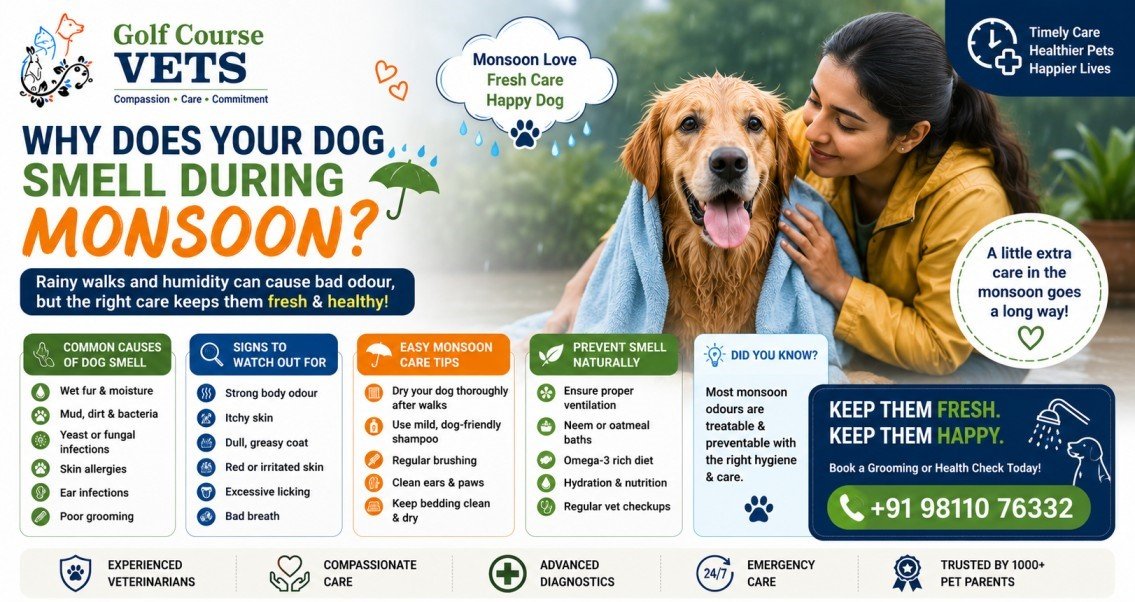
Monsoon season brings relief from extreme summer heat, but for many dog owners, it also brings a new challenge — an unpleasant smell coming from their pets. During rainy weather, many dogs develop a strong wet odor that becomes difficult to ignore inside homes and apartments.
While some mild smell after getting wet is normal, a strong or persistent odor may indicate underlying hygiene problems, fungal infections, moisture buildup, or skin issues. In cities like Gurgaon, where humidity rises sharply during monsoon, dogs become more vulnerable to skin and coat-related problems.
Understanding why dogs smell worse during rainy season and learning how to manage it properly can help keep your pet healthy, comfortable, and fresh throughout the monsoon months.
Why Dogs Smell Stronger During Monsoon
Dogs naturally produce oils on their skin and coat that help protect them from environmental damage. During monsoon, excessive moisture and humidity interact with these oils and bacteria present on the skin, creating the strong “wet dog smell” that many owners notice.
Rainwater, damp fur, muddy walks, and reduced sunlight exposure can make the smell stronger and more persistent. Dogs with thick coats or long fur often struggle more because moisture remains trapped inside the coat for longer periods.
Humidity also creates the perfect environment for bacteria and fungi to grow rapidly on the skin.
Hidden Skin Infections Can Cause Bad Odor
Sometimes the smell is not just caused by wet fur. Monsoon season increases the risk of fungal and bacterial infections, especially in dogs with sensitive skin or poor coat hygiene.
A dog suffering from a skin infection may also show:
- excessive scratching
- redness
- greasy skin
- hair loss
- irritated ears
- licking of paws or body
These infections often begin silently and gradually worsen if moisture stays trapped inside the fur.
Dogs that remain wet for long periods after walks or baths are especially vulnerable.
Damp Paws & Dirty Fur Make the Problem Worse
Many pet owners clean only the visible mud after walks but ignore moisture trapped between the paws, nails, and undercoat. Wet paws carry dirt, bacteria, and fungal organisms into the home, increasing both odor and infection risk.
During monsoon, dogs often walk through puddles, muddy roads, and damp grass. If the fur is not dried properly afterward, unpleasant smell can build up quickly.
Apartment dogs in Gurgaon may experience stronger odor because limited airflow indoors slows down drying.
Over-Bathing During Monsoon is Also a Mistake
Many owners try to remove odor by bathing dogs too frequently during rainy season. Unfortunately, excessive bathing strips away natural skin oils and may actually worsen skin sensitivity.
Frequent shampooing can make the skin dry, itchy, and vulnerable to fungal growth. Using human shampoos or harsh chemical products may increase irritation further.
Balanced grooming and proper drying are more important than excessive bathing.
Why Proper Drying is Extremely Important
One of the biggest mistakes during monsoon is leaving the dog’s coat slightly damp after walks or baths. Even small amounts of trapped moisture can create the perfect breeding ground for bacteria and fungus.
Dogs with thick coats, floppy ears, or skin folds need extra attention because these areas trap moisture easily.
Using soft towels, gentle blow drying, and regular brushing helps improve airflow inside the coat and prevents odor buildup.
How Grooming Helps Reduce Monsoon Odor
Regular grooming plays a major role in controlling smell during rainy season. Proper brushing removes dirt, loose fur, and trapped moisture before they lead to skin problems.
Professional grooming also helps detect:
- fungal infections
- tick infestations
- ear infections
- hidden skin irritation
Dogs that receive regular coat maintenance usually experience fewer odor problems during monsoon.
Experienced grooming professionals understand how seasonal humidity affects different breeds and coat types.
When Should You Visit a Vet?
If the smell becomes unusually strong or is combined with redness, itching, wounds, or hair loss, veterinary attention may be necessary. Persistent odor often indicates an underlying skin or ear infection that requires medical treatment.
Ignoring these symptoms may allow infections to spread and become painful for the dog.
If your dog develops severe odor or skin discomfort during monsoon, experienced professionals like
Golf Course Vets
identify the root cause and recommend proper treatment and grooming care.
🧠 Final Thoughts
Monsoon season can be difficult for dogs because humidity, damp fur, and reduced drying increase the chances of odor and skin infections. While mild wet smell is normal occasionally, strong or persistent odor should never be ignored.
Proper grooming, careful drying, regular brushing, and early skin checks can make a huge difference in your dog’s comfort and hygiene during rainy months. With the right care and timely attention, pet owners can help their dogs stay clean, healthy, and odor-free throughout Gurgaon’s monsoon season.
Frequently Asked Questions
Q1.Why do dogs smell worse during monsoon?
Humidity and moisture interact with natural skin oils and bacteria, causing stronger odor during rainy season.
Q2.Can fungal infections cause bad smell in dogs?
Yes, fungal and bacterial infections often cause strong odor, itching, and skin irritation.
Q3.Is frequent bathing safe during monsoon?
Excessive bathing may damage the skin and worsen irritation. Balanced grooming is safer.
Q4.How can I reduce wet dog smell at home?
Proper drying, regular brushing, paw cleaning, and grooming help reduce odor significantly.
Q5.When should I visit a vet for dog odor problems?
You should consult a vet if bad smell is combined with itching, redness, hair loss, or skin wounds.