
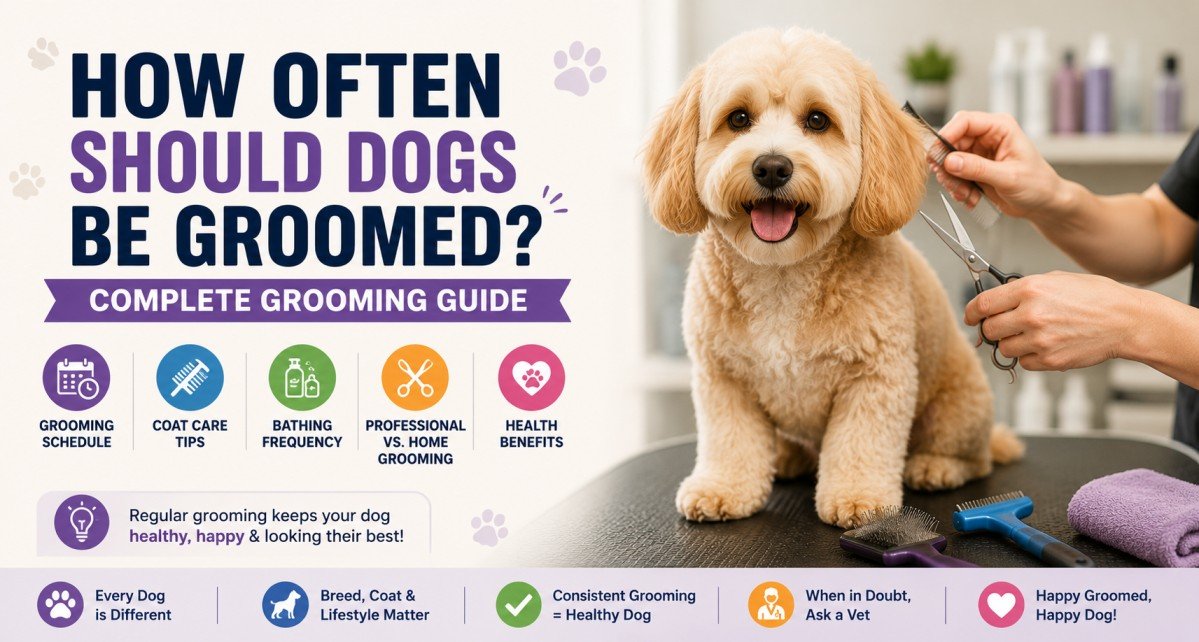
How Often Should You Groom Your Dog? Expert Grooming Tips for Every Breed
Grooming is much more than keeping your dog looking clean and adorable. It plays a vital role in maintaining your pet’s overall health, preventing skin problems, reducing shedding, and identifying potential health issues before they become serious. Every dog, regardless of breed or coat type, requires regular grooming, but the ideal schedule varies depending on factors such as breed, age, lifestyle, and coat texture.
Many pet owners wonder whether they are grooming their dogs too often or not enough. The truth is that there is no one-size-fits-all answer. Understanding your dog’s individual grooming needs is the key to keeping them healthy, comfortable, and happy.
Why Regular Grooming Is Important
A consistent grooming routine does much more than improve your dog’s appearance. Brushing removes loose hair, dirt, and debris while distributing natural oils that keep the coat shiny and healthy. Regular baths help eliminate allergens, bacteria, and unpleasant odors, while nail trimming prevents painful walking and joint strain. Grooming sessions also provide an opportunity to check for lumps, skin infections, parasites, ear problems, or injuries that might otherwise go unnoticed.
Dogs that receive routine grooming are generally less likely to develop matted fur, painful skin infections, ear infections, or overgrown nails that affect their mobility.
How Often Should Different Dogs Be Groomed?
The ideal grooming schedule depends largely on your dog’s coat type.
Short-haired breeds such as Beagles, Labradors, Boxers, and Dobermans usually require brushing once or twice a week to remove loose hair and keep their coats healthy. Bathing every four to eight weeks is generally sufficient unless they become particularly dirty.
Medium-coated breeds like Golden Retrievers, Border Collies, and Cocker Spaniels benefit from brushing several times a week. Their thicker coats can trap dirt and develop tangles if neglected. Bathing every four to six weeks helps maintain skin health without stripping natural oils.
Long-haired breeds, including Shih Tzus, Lhasa Apsos, Yorkshire Terriers, and Maltese, require daily brushing to prevent knots and painful matting. Professional grooming every four to six weeks is highly recommended to keep their coats manageable and healthy.
Double-coated breeds such as Huskies, German Shepherds, and Akitas require frequent brushing, particularly during seasonal shedding periods. While they shed heavily, excessive bathing should be avoided as it may damage the natural protective oils in their coat.
Curly-coated breeds like Poodles and Labradoodles require brushing several times a week along with professional trimming every six to eight weeks to prevent matting and maintain their unique coat texture.
Signs Your Dog Needs Grooming
Your dog may already be telling you it’s time for a grooming session. A dull or tangled coat, unpleasant body odor, excessive shedding, dirty ears, overgrown nails, or frequent scratching are all common signs that grooming has been delayed. Matted fur can pull painfully on the skin, while neglected nails can affect posture and make walking uncomfortable.
If your dog develops persistent itching, redness, or skin irritation despite regular grooming, it may indicate allergies, parasites, or a skin infection that requires veterinary attention.
How Often Should You Bathe Your Dog?
Bathing frequency depends on your dog’s coat type, activity level, and skin condition. Most healthy dogs only require a bath every four to six weeks. Dogs that spend a lot of time outdoors or enjoy swimming may need baths more frequently, while dogs with sensitive skin may benefit from less frequent bathing using veterinarian-recommended shampoos.
Using human shampoo should always be avoided because it can disrupt your dog’s natural skin pH and lead to dryness and irritation.
Don’t Forget Nail Care and Ear Cleaning
Nail trimming is often overlooked but is essential for your dog’s comfort. Most dogs require nail trimming every three to four weeks. If you hear clicking sounds when your dog walks across the floor, their nails are likely too long.
Ear cleaning is equally important, particularly for breeds with floppy ears such as Cocker Spaniels and Basset Hounds. Moisture and wax buildup inside the ears can create an ideal environment for bacterial and yeast infections. Checking your dog’s ears weekly and cleaning them when necessary can help prevent painful infections.
Dental Hygiene Is Part of Grooming Too
Many pet owners focus on the coat while forgetting about oral health. Dental disease is one of the most common health problems in dogs and can lead to pain, bad breath, and even heart or kidney complications if left untreated.
Brushing your dog’s teeth several times a week, offering dental chews, and scheduling regular dental check-ups can significantly improve their overall health.
Seasonal Grooming Matters
Your dog’s grooming needs can change throughout the year. During summer, regular brushing helps remove excess undercoat and improves air circulation through the coat, reducing the risk of overheating. During the monsoon season, it’s important to dry your dog thoroughly after walks to prevent fungal infections. In winter, moisturizing shampoos and regular brushing help combat dry skin caused by colder weather.
Adjusting your grooming routine according to the season keeps your dog comfortable and reduces the risk of common skin problems.
Should You Groom Your Dog at Home or Visit a Professional?
Basic grooming tasks such as brushing, wiping paws, and checking ears can easily be done at home. However, professional groomers have specialized equipment and experience to safely trim nails, remove matted fur, clean ears, and perform breed-specific haircuts.
Professional grooming is especially beneficial for long-haired, curly-coated, or double-coated breeds that require advanced coat maintenance.
Why Choose Golf Course Vets?
At Golf Course Vets, we believe grooming is an essential part of preventive healthcare. Our experienced team provides gentle, stress-free grooming services tailored to your dog’s breed, coat type, and individual needs. We carefully examine your pet’s skin, ears, nails, and coat during every grooming session, allowing us to identify potential health concerns early.
Whether your dog needs a routine bath, coat maintenance, nail trimming, ear cleaning, or a complete grooming session, our team is committed to keeping your furry companion healthy, comfortable, and looking their best.
Conclusion
Regular grooming is one of the simplest yet most effective ways to protect your dog’s health. Beyond maintaining a clean and beautiful coat, grooming helps prevent skin diseases, improves comfort, reduces shedding, and allows early detection of health problems. By following the right grooming schedule for your dog’s breed and coat type, you can ensure they remain healthy and happy throughout every stage of life.
If you’re unsure how often your dog should be groomed or would like professional assistance, the experienced team at Golf Course Vets is here to help with expert grooming and comprehensive veterinary care.
Frequently Asked Questions
Q1.How often should I groom my dog?
Most dogs benefit from brushing several times a week and bathing every four to six weeks, although the ideal schedule depends on their breed and coat type.
Q2.Can I bathe my dog every week?
Weekly baths are usually unnecessary unless recommended by your veterinarian for a specific skin condition. Overbathing can dry out your dog’s skin.
Q3.Which dogs require the most grooming?
Long-haired and curly-coated breeds such as Shih Tzus, Poodles, and Lhasa Apsos require the most frequent grooming to prevent matting and skin issues.
Q4.How do I know if my dog needs professional grooming?
If your dog’s coat is matted, nails are overgrown, ears are dirty, or brushing at home has become difficult, it’s time to schedule a professional grooming session.
Q5.Is grooming good for my dog's health?
Yes. Regular grooming helps prevent skin infections, reduces shedding, improves coat health, supports hygiene, and allows early detection of health problems.