Separation anxiety is a common behavioral issue in puppies, especially during the first few months after adoption. Puppies form strong emotional bonds with their owners, and sudden isolation can cause stress, fear, and anxiety. If not addressed early, separation anxiety can worsen over time and affect a puppy’s overall well-being.
Understanding the signs and following a structured treatment plan helps puppies feel safe, confident, and emotionally balanced.
What Is Separation Anxiety in Puppies?
Separation anxiety occurs when a puppy becomes distressed after being left alone or separated from their owner. Unlike normal attention-seeking behavior, separation anxiety involves intense fear and panic that does not improve on its own.
This condition is more common in puppies that were separated early from their mother, recently rehomed, or overly dependent on constant human presence.
Common Signs of Separation Anxiety
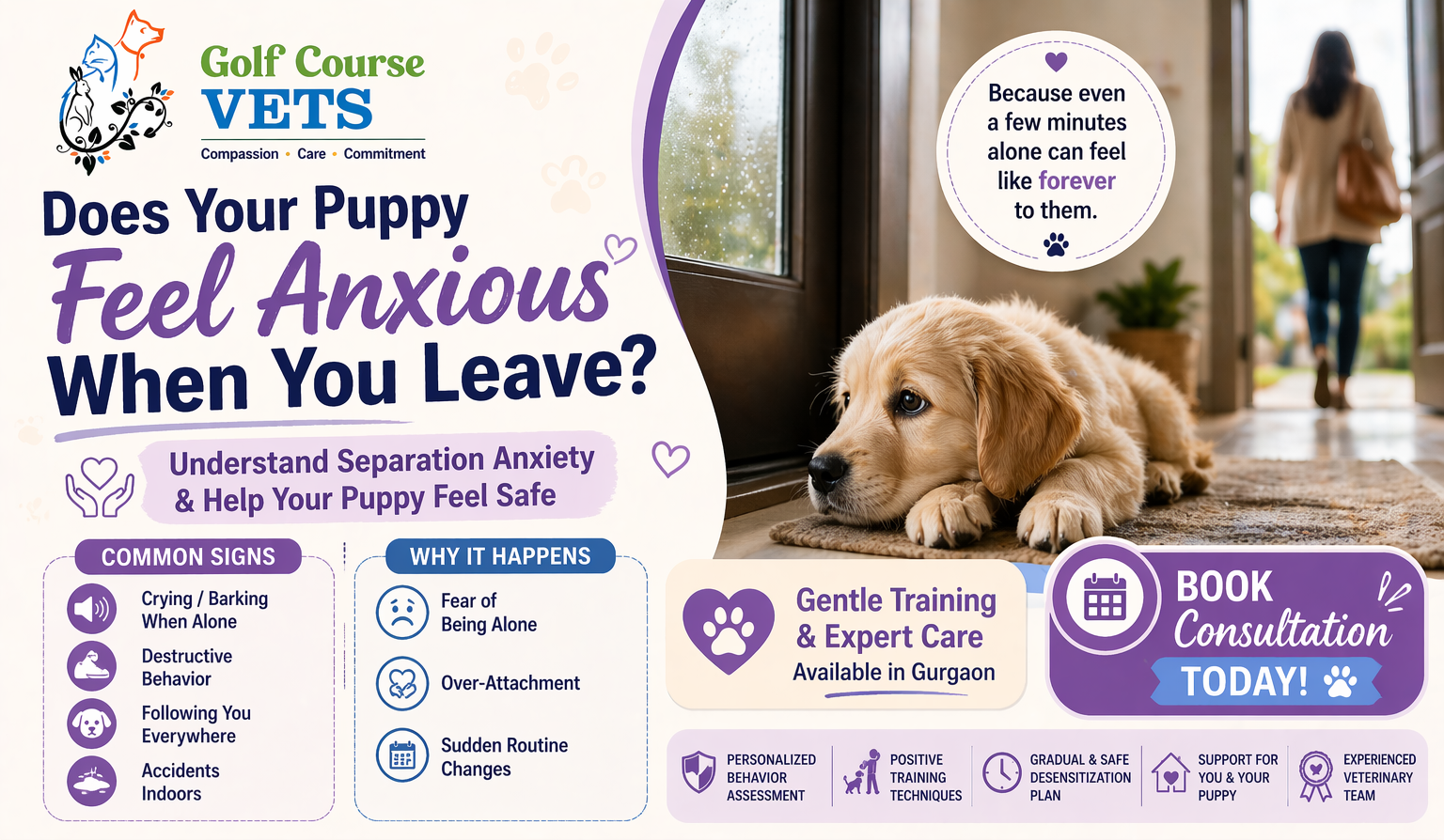
Puppies with separation anxiety often show distress-related behaviors shortly after their owner leaves. These may include excessive crying, whining, barking, destructive chewing, scratching doors, or attempting to escape.
Some puppies may also show physical symptoms such as drooling, pacing, trembling, or loss of appetite. In severe cases, inappropriate urination or defecation indoors can occur despite proper toilet training.
Why Puppies Develop Separation Anxiety
The most common cause is sudden change. Moving to a new home, change in routine, or loss of constant companionship can trigger anxiety. Puppies that receive constant attention throughout the day but are left alone abruptly often struggle the most.
Lack of mental stimulation, insufficient exercise, and previous negative experiences can also contribute to anxiety-related behaviors.
Treatment Plan for Separation Anxiety
Treatment focuses on gradual training, emotional reassurance, and consistency. Puppies should be slowly taught to stay alone for short periods, increasing the duration gradually. Creating a calm departure routine helps reduce fear associated with the owner leaving.
Providing interactive toys, chew items, and mental stimulation before leaving helps keep the puppy engaged. Avoid dramatic goodbyes or greetings, as these can increase anxiety levels.
In moderate to severe cases, professional guidance from a veterinarian or behavior specialist may be required. Underlying medical issues should also be ruled out, as discomfort or illness can worsen anxiety symptoms.
When to Seek Professional Help
If anxiety behaviors persist for weeks, worsen over time, or result in self-injury or extreme distress, professional evaluation is necessary. Early intervention prevents long-term behavioral problems and improves quality of life for both the puppy and the owner.
Pet parents seeking Puppy treatment in Gurgaon for separation anxiety should consult an experienced veterinarian to assess behavioral and health factors and create a personalized treatment plan for their puppy.