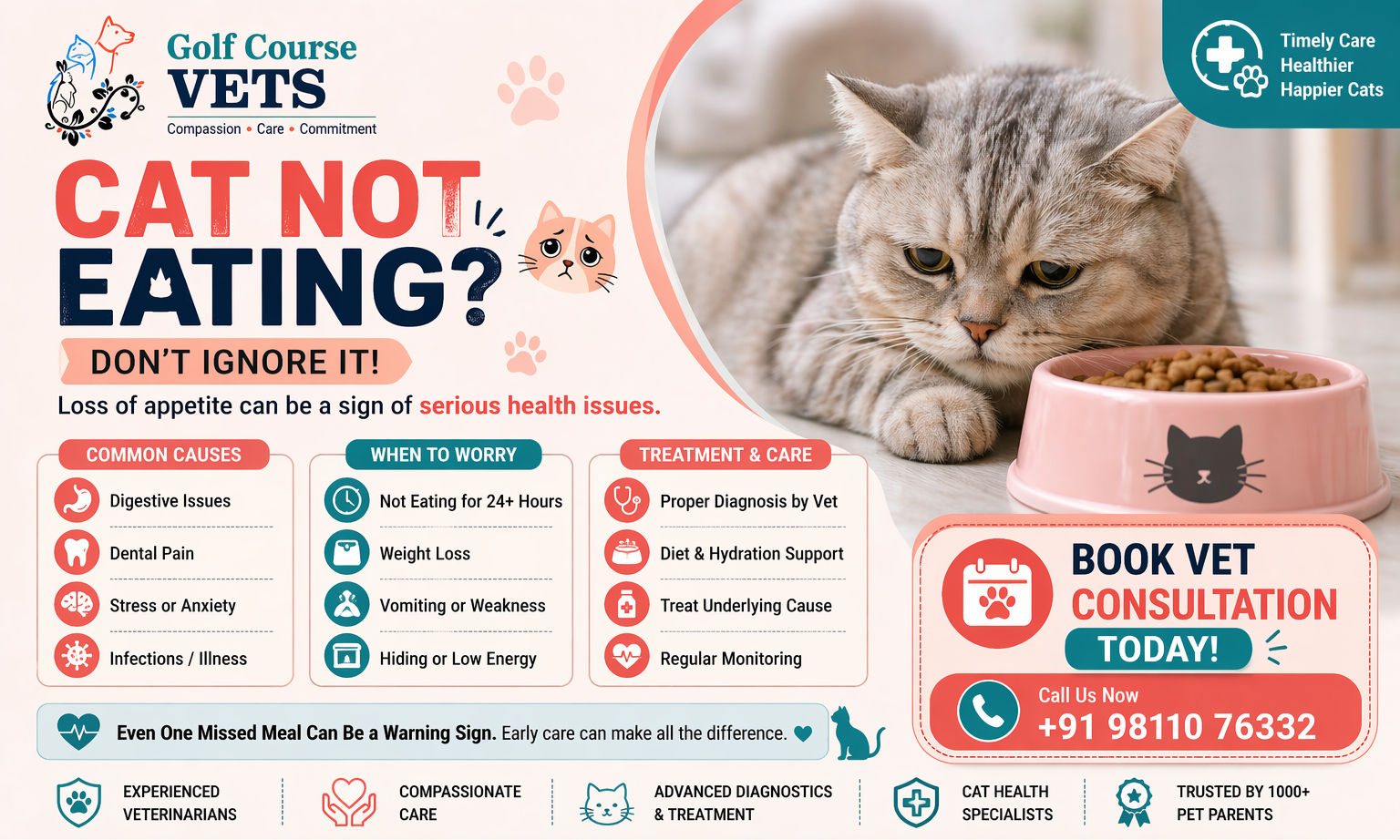
If your cat suddenly stops eating, it can be alarming. Cats are known for being picky eaters, but a complete loss of appetite is often a sign that something isn’t right.
Unlike dogs, cats can develop serious health complications if they don’t eat for even a short period. That’s why it’s important to understand the cause and take timely action—especially in urban environments like Gurgaon
Common Reasons Why Cats Stop Eating:
1. Stress or Environmental Changes
Cats are sensitive to changes like:
- Moving to a new home
- New pet or family member
- Loud noises or construction
👉 Stress can easily affect their appetite.
2. Illness or Infection
Common health issues include:
- Fever
- Viral infections
- Digestive problems
👉 If your cat is also lethargic, this is a warning sign.
3. Dental Problems
Common health issues include:
- Pain while chewing
- Gum infections
- Broken teeth
👉 Cats may want to eat but avoid food due to pain.
4. Change in Food or Diet
Sudden changes in:
- Brand
- Flavor
- Texture
👉 Cats can reject unfamiliar food immediately.
5. Hairballs or Digestive Issues
Hairballs can block digestion and reduce appetite.
6. Serious Medical Conditions
- Liver disease
- Kidney issues
- Internal infections
👉 These require immediate veterinary attention.
What You Can Do at Home (Mild Cases Only)
- Offer fresh and warm food
- Try wet food instead of dry
- Keep feeding area quiet
- Ensure clean water availability
⚠️ Avoid force-feeding without veterinary advice.
When to Visit a Vet in Gurgaon
If symptoms persist, consult professionals like Golf Course Vets They can:
- Diagnose underlying issues
- Provide medications
- Recommend proper diet
- Perform necessary tests
👉 Early diagnosis can prevent serious complications.
Prevention Tips for Cat Owners
- Maintain a consistent diet
- Avoid sudden food changes
- Regular health checkups
- Reduce stress in environment
- Keep litter and feeding area clean
Conclusion (CTA)
A cat not eating is never something to ignore. While it may be a minor issue, it can quickly turn serious if left untreated.
If your cat shows unusual behavior or refuses food, it’s always safer to consult a professional veterinarian.
Frequently Asked Questions
Q1. How long can a cat go without eating?
Usually not more than 24–48 hours safely.
Q2. Why is my cat not eating but drinking water?
It could be stress, illness, or dental pain.
Q3. Can stress cause loss of appetite in cats?
Yes, stress is one of the most common reasons.
Q4. Should I force-feed my cat?
No, always consult a vet before doing so.
Q5. What should I feed a cat that refuses to eat?
Try wet food or slightly warmed meals to stimulate appetite.
Contact Us for more query